Awareness
Susan searches for hospitals, asks friends for recommendations and reads online reviews. She decides on a hospital and schedules an appointment via website/app, social media, or referrals.
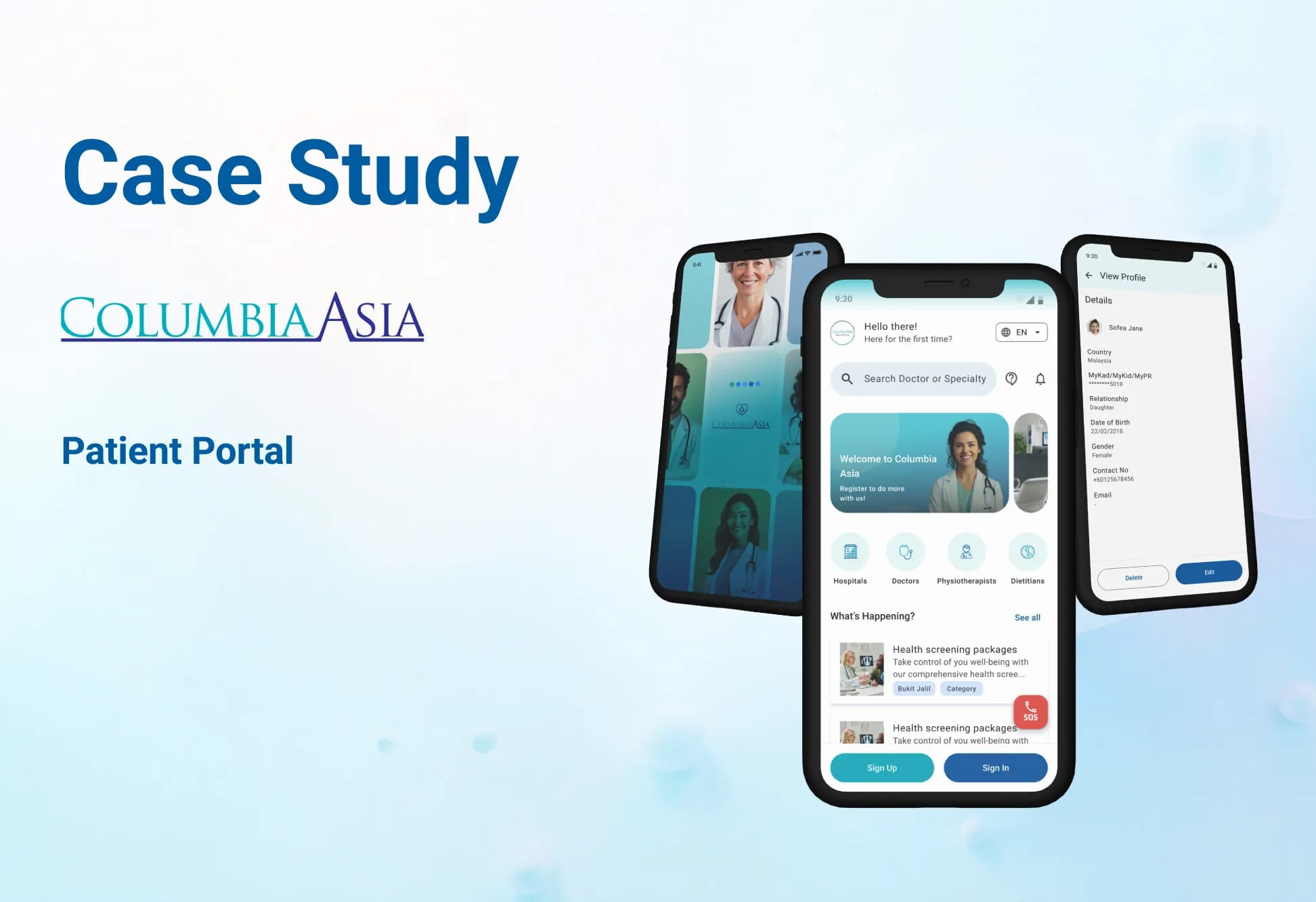
CASE STUDY
Enhancing UX for Seamless Healthcare
Redesigned the Columbia Asia Patient Portal to improve UX, enabling seamless appointment booking,
medical records access, and secure payments.
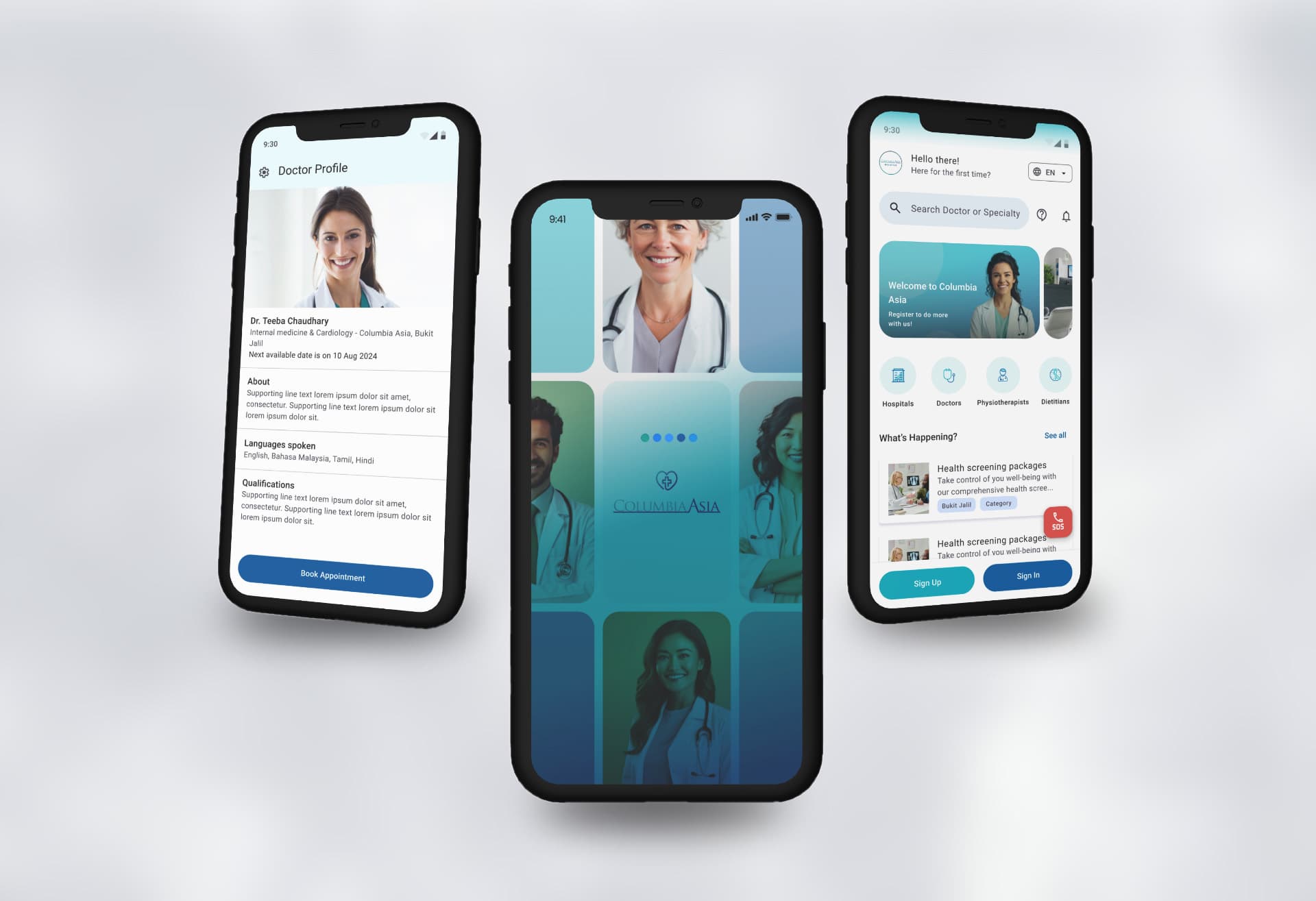
The Columbia Asia Patient Portal was designed to enhance the healthcare experience for patients by providing a seamless and user-friendly digital platform. This case study outlines the research, challenges, user insights, design solutions, and final outcomes of the project.
Columbia Asia, Malaysia
Healthcare & Meical
UX Research/Visual
Figma, FigJam, Miro
Our goals was to design and develop a user friendly and intuitive mobile web app that empowers patients to:
As a Senior UX Designer, I was deeply involved in every stage of design process, including
A user-friendly mobile web app designed to help patients conveniently manage their healthcare needs.
To simplify key healthcare tasks, including:
The Columbia Asia Patient App serves patients across Malaysia, Indonesia, and Vietnam, providing seamless access to Columbia Asia hospitals and services.
The app is available 24/7, allowing users to book appointments, access records, and manage healthcare anytime, anywhere.
Patients in Malaysia, Indonesia, and Vietnam seeking a streamlined, digital healthcare experience.
The previous Columbia Asia app had several usability challenges, including:
These issues caused frustration for users and created inefficiencies in healthcare management. A new user-friendly, secure, and seamless app was needed to enhance patient experience, ensuring smooth appointment booking, medical record access, and bill payments.
These best practices were established based on market research, user feedback, and industry standards, ensuring an optimal patient experience.
UX Activity
To design an intuitive and patient-centric experience, I conducted extensive qualitative research to understand user behaviors, expectations, and pain points.
Conducted 15+ in-depth user interviews with:
To uncover real-world pain points, I designed a structured set of open-ended and behavior-driven questions, such as:
Survey Results & Key Insights
Product Direction
Patient Journey Map

Business Analyst
Lisa Cheng is planning her first medical checkup. She wants to visit the nearest hospital and book an appointment conveniently.
Susan searches for hospitals, asks friends for recommendations and reads online reviews. She decides on a hospital and schedules an appointment via website/app, social media, or referrals.
Susan checks hospital location and contacts the right person. She receives automated appointment confirmation, email notification, and a reminder call.
Susan arrives at the hospital and speaks to a medical representative, waits in the waiting area, consults a doctor, undergoes a medical checkup, collects her medical report, and makes payment.
Susan leaves the hospital and receives a follow-up email with doctor's recommendations and a reminder in 3 months for her next check-up.
Analysis
To design an intuitive and patient-centric experience, I conducted extensive qualitative research to understand user behaviors, expectations, and pain points.
Identified Pain Points
Despite being launched years ago, the existing Columbia Asia Patient App faces major usability challenges. Key issues include:
Research Synthesis
Competitive Research
Examined leading healthcare apps (Sunway Hospital, MyHealth 360, Doctor Anywhere, Practo) to identify UX opportunities:
Following the research phase, I facilitated a two-day workshop with the clients to present key insights. The session included collaborative activities such as empathy mapping, ideation, brainstorming, wireframe sketching, and idea voting. This interactive approach helped align stakeholders, refine design goals, and generate actionable solutions for an improved user experience.
1 / 4
I incorporated the Material Design system to ensure a seamless, intuitive, and responsive user experience across devices. By utilizing its well-structured components and flexible design principles, I maintained consistency while enhancing usability. At the same time, I carefully integrated the original brand colors to preserve the brand's visual identity and recognition.
1 / 5
The redesigned Columbia Asia Patient Portal significantly improved user experience, addressing major pain points and enhancing patient engagement. This case study demonstrates the importance of user research, iterative design, and collaboration in delivering a seamless healthcare solution.
Thank you for reviewing my UX case study! Designing meaningful experiences is a continuous journey. Your feedback is valuable. I'd love to hear your thoughts. Let's connect and explore how we can innovate together.